

Futurecast Forum | Final Integrated Workshop Summary - 2026 Outlook
The Pacific Northwest residential real estate market is no longer governed by a traditional boom-and-bust cycle. Instead, it is being shaped by a convergence of structural constraints, behavioral adaptation, generational capital flows, policy reform, and technological disruption, each influencing how households and investors deploy capital in an environment defined by uncertainty and finite opportunity.
At the macro level, the early phase of the Great Wealth Transfer is already reshaping housing demand. As retirements accelerate, affluent households are moving capital earlier in the lifecycle, aided by clearer tax frameworks and heightened awareness of capital gains exposure. Families are increasingly offering down payment assistance, shared equity, and trust-based ownership structures to help adult children overcome entry barriers in a Seattle market where renters outnumber homeowners, and affordability remains structurally constrained.
Affordability, however, is not expected to meaningfully improve through interest rates alone. The prevailing view is that mortgage rates are likely to remain relatively static, removing the psychological crutch of “waiting for rates to fall.” As a result, the consumer opportunity is shifting away from rate speculation and toward preferred selection, timing, and negotiation power. The logic is simple and increasingly accepted: you can refinance a mortgage, but you cannot rebuy a home—and inventory is finite.
This reality is particularly acute as builders and land developers continue to pull back, having digested several years of unsavory market conditions marked by high land costs, elevated construction pricing, onerous financing and underwriting, and compressed margins. Developer deals are primed. Many are choosing to wait for the next cycle before re-entering aggressively. The consequence is a constrained development pipeline, especially for for-sale products. In practical terms, what buyers see today is largely what they will get for the foreseeable future.
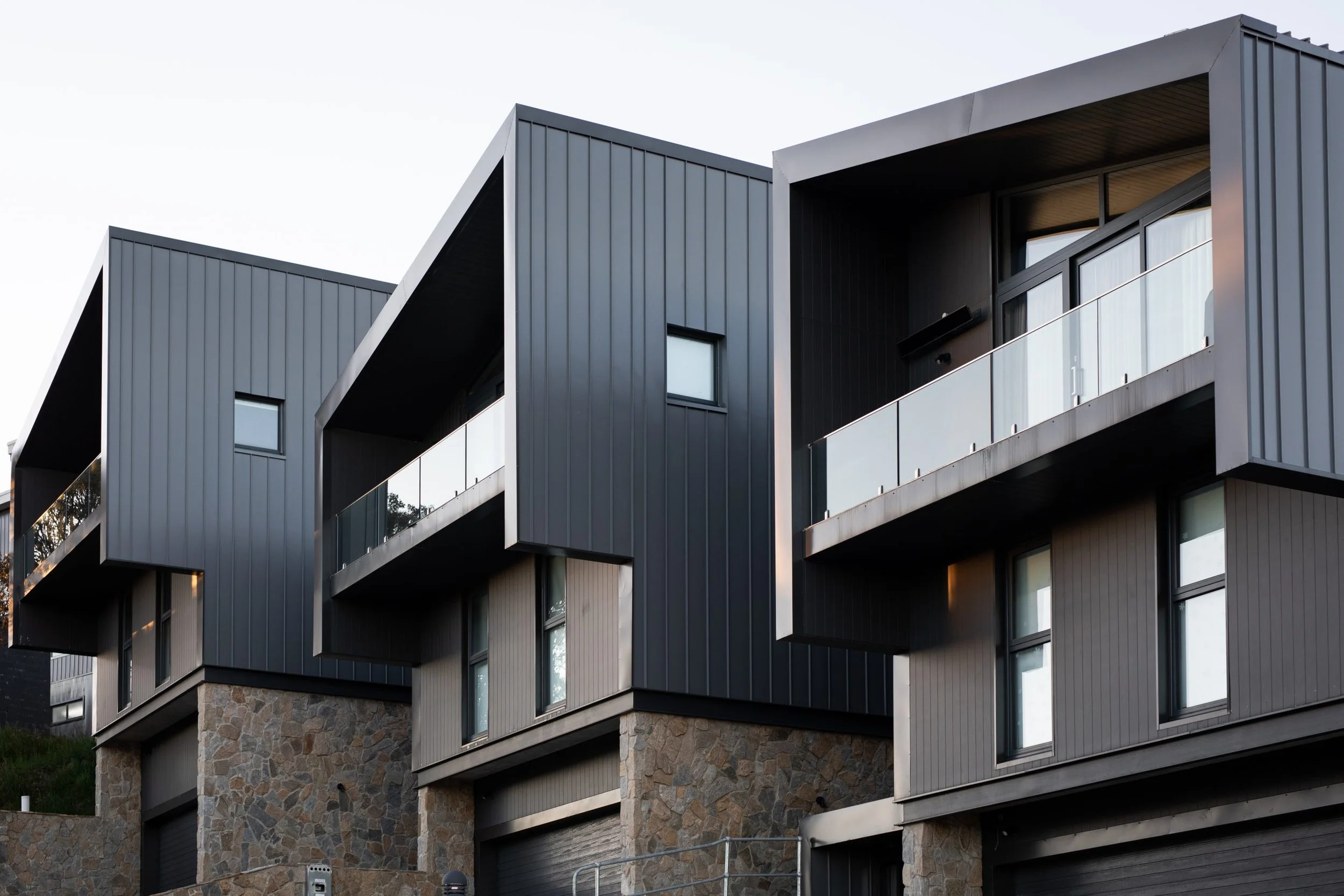
Against this backdrop, an inordinate percentage of renters are expected to explore entry-level homeownership, gravitating toward well-designed, sharpened townhomes, cottages/ADUs, and condominiums in urban and transit-connected locations. These product types represent the most attainable on-ramp to ownership, yet they are also among the most supply-constrained given developer headwinds (high costs of land, entitlements, tariffs, and financing). The imbalance between rising demand and limited future delivery is poised to become one of the defining tensions of the next cycle.

Policy reform is further reshaping the map. House Bill 1110 is enabling micro-housing and middle-housing projects in municipalities that were not historically centers of density. Over time, this will distribute incremental housing supply more broadly across the region, but it will not immediately solve affordability pressures—particularly for for-sale product—given development economics and infrastructure limitations.
Layered on top of these structural forces is a growing level of anxiety tied to artificial intelligence and workforce disruption. Even among senior executives and high-earning professionals, uncertainty around AI-driven job attrition is influencing housing behavior. Many are choosing to preserve liquidity and flexibility—holding onto owned homes while transitioning into executive rental housing rather than selling into a transitional market. Some are downsizing into other rentals and pocketing the delta as a hedge.
This behavior is converging with strong inbound demand from affluent tech professionals relocating from California. Many arrive with capital and expanding stock portfolios, but limited urgency to buy, instead seeking luxury leases for two to three years while they evaluate neighborhoods, schools, entitlement timelines, and custom-build opportunities. As a result, executive rentals are emerging as a distinct and undersupplied asset class, bridging lifestyle needs with strategic optionality. Brokerages are exploring executive leasing and property management solutions.
Taken together, these forces reveal a clear signal:
Inventory is finite and increasingly irreplaceable
Rate relief is no longer the catalyst—selection and leverage are the advantages
Entry-level ownership will be concentrated in condos and townhomes
Developers are waiting; demand is not (it’s been pooling)
Flexibility, optionality, and foresight command a premium (increasing demand for custom home builds to achieve lifestyle goals)
The central insight is this: the next phase of the Pacific Northwest housing market will reward those who act based on availability and positioning, not those who wait for a perfect rate environment that may never arrive.
You can refinance the debt.
You cannot rebuy the opportunity.
In a market where supply is retreating and behavior is accelerating, the signal is already clear for those prepared to move ahead of the headlines.